
The iCare Enterprise Cloud EHR supports the smallest practices, the largest health systems, and everyone in between.





Focus on patient care, not software.
Finally, an Electronic Health Record system for hospitals, clinics, and practices that is flexible enough to change as healthcare evolves yet doesn’t cost a fortune to implement and operate.
Administration
iCare provides full administrative capabilities for healtcare providers of any size and complexity. from pre-admission to claim submission, iCare covers the entire patient journey.
Clinical
Streamline workflows and enhance clinical decision-making with iCare's intuitive navigation, customizable templates, and real-time data integration.
Revenue Cycle
iCare Revenue Cycle Management is seamlessly integrated with the clinical systems and automates key tasks, so you can focus on patient care and maximize reimbursement and collections.
A Fully Integrated Care Platform
Our fully configurable system adapts to your evolving needs, empowering you to personalize medicine and treatments based on individual patient characteristics. And with our integrated Big Data capabilities, iCare revolutionizes the Health IT industry, bridging the gap between data utilization and healthcare delivery. Trust iCare to transform the way you manage healthcare, today and tomorrow..

Built to Scale Infinitely
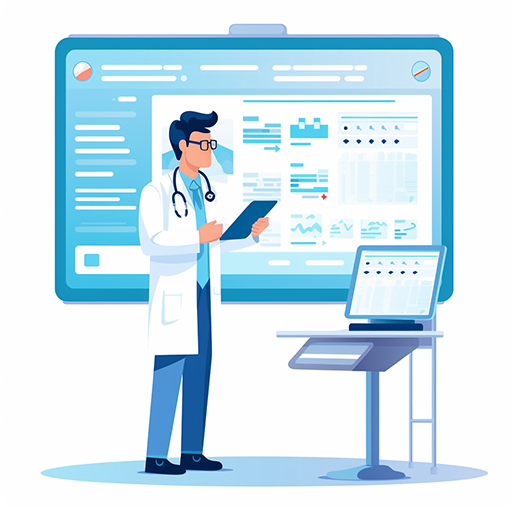
iCare is the only cloud based EHR that can scale from the smallest sole practitioner practice to the largest acute healthcare system. For both ambulatory and acute care use, iCare is easy to use in all settings, yet powerful enough to handle the most demanding requirements.
The EHR that Makes Your Life Easier
The iCare EHR is easy to acquire with simple pricing, easy to set up with easy implementation, and most importantly, iCare is easy to use. Make your life easier - with iCare.

"iCare is friendly, attractive, and the visual language is intuitive and easy to navigate. iCare does what it promises, without fuss."
- Physician User
Ready To Get Started?
EHR
An electronic health record EHR: is systematic collection of electronic health information about individual patients or populations. It is a record in digital format that is capable of being shared across different health care settings or facilities. iCare allows sharing of data to occur by utilizing a secure “cloud” architecture that enables on-demand enterprise-wide information systems and other information networks or exchanges to call on real time data. EHRs include a range of data, including demographics, medical history, medication and allergies, immunization status, laboratory test results, radiology images, vital signs, personal stats like age and weight, and more.
EHR, EMR, EPR: The terms EHR, EPR (electronic patient record) and EMR (electronic medical record) are often used interchangeably, although differences between them can be defined. The EMR can, for example, be defined as the patient record created in hospitals and ambulatory environments, and which can serve as a data source for the EHR. It is important to note that an EHR is generated and maintained within an institution, such as a hospital, integrated delivery network, clinic, or physician office, to give patients, physicians and other health care providers, employers, and payers or insurers access to a patient’s medical records across facilities..
AI
iCareEHR and AI
The iCare EHR can leverage AI to significantly enhance healthcare delivery, including in alignment with CMS HIT-1 regulation requirements for Decision Support Interventions (DSI) shown at 170.315(b)(11). Here’s an overview:
AI in the iCare EHR
- Advanced Data Management:
-
- Automated Data Entry and Extraction: AI can automate the transcription of clinical notes and extraction of relevant information, improving data accuracy and completeness.
- Data Integration: AI integrates data from various sources (labs, imaging, wearable devices) into the EHR, providing a comprehensive view of patient health.
-
- Predictive Analytics:
-
- Risk Prediction Models: AI analyzes patient data to predict risks (e.g., readmissions, disease progression), enabling proactive interventions.
- Population Health Management: Predictive analytics identify trends and patterns in population health, aiding in managing chronic diseases and preventive care.
-
- Patient Monitoring and Management:
-
- Real-Time Monitoring: AI continuously monitors patient data, alerting healthcare providers to critical changes that require immediate action.
- Personalized Treatment Plans: AI tailors treatment plans based on historical patient data and outcomes, enhancing patient care.
-
Decision Support Interventions (DSI) and CMS Regulation b(11)
Decision Support Interventions (DSI) provide evidence-based recommendations at the point of care. CMS regulation b(11) mandates DSI to improve care quality and safety.
- Diagnostic Assistance:
-
- AI-Powered Diagnostics: AI assists in diagnosing conditions by analyzing patient data against large datasets, suggesting possible diagnoses based on patterns and trends.
- Early Detection: AI detects early signs of diseases (e.g., sepsis, cancer), enabling timely intervention.
-
- Treatment Recommendations:
-
- Evidence-Based Suggestions: AI offers treatment recommendations based on clinical guidelines, research, and patient-specific factors, ensuring best practice adherence.
- Medication Management: AI alerts clinicians to potential drug interactions, allergies, and contraindications, enhancing patient safety.
-
- Outcome Prediction and Management:
-
- Prognostic Models: AI predicts patient outcomes (e.g., recovery times, treatment responses), aiding in informed care planning.
- Preventive Care: AI reminds clinicians and patients about preventive measures (e.g., vaccinations, screenings) based on individual risk factors.
-
iCare EHR vs. Older Generation EHRs
Modern Cloud-Based EHRs like iCare:
- Scalability and Flexibility: Cloud infrastructure supports scalable and flexible AI tool deployment, adapting to healthcare needs.
- Real-Time Data Access: Cloud systems enable real-time data access from any location, facilitating timely decisions and collaboration.
- Interoperability: iCare integrates seamlessly with other systems and data sources, enhancing data sharing and collaboration.
- Continuous Updates: Cloud EHRs receive continuous updates with the latest AI algorithms and features, ensuring cutting-edge technology.
Older Generation EHRs (Client-Server Technology):
- Limited Scalability: Client-server systems lack scalability, hindering the implementation of resource-intensive AI tools.
- Delayed Data Access: Data access is slower and less reliable, impacting timely decision-making and patient care.
- Integration Challenges: Older EHRs struggle with integrating diverse data sources, limiting AI effectiveness.
- Infrequent Updates: Updating client-server EHRs is cumbersome and infrequent, resulting in outdated technology and features.
Conclusion
The iCare EHR can harness AI to improve data management, predictive analytics, patient monitoring, and decision support interventions, aligning with CMS regulation b(11). Compared to older generation EHRs, iCare’s cloud-based system offers greater scalability, real-time data access, better interoperability, and continuous updates, optimizing the use of AI in healthcare and enhancing patient outcomes and safety.
Cloud
It 's clear that cloud-based software is here to stay. Computer application usage is becoming a utility, similar to electricity and with computer networks having finally caught-up with computer processors, it’s easier and cheaper than ever to securely move systems to the cloud without sacrificing speed or functionality. So why is the Healthcare sector, taking the opposite approach? Hospitals are spending hundreds of millions of dollars to “upgrade” IT infrastructure in order to cash-in on government incentives and insure full Medicare and Medicaid reimbursements. But, are they really upgrading?
The answer is a resounding no. Overspending on decades-old architecture and deploying with an “installed” or “hosted” model where the hospital or vendor maintains hardware and software is something that corporate America is simply not doing anymore. Hosted software, while it alleviates the need for the hospital to maintain the infrastructure, does not solve the fundamental problem. “Installed” and “Hosted” software is inflexible and actually creates a negative value gap.
Over time, the gap between the Electronic Health Record and the actual hospital requirements is growing and the hospital receives less and less value from the EHR investment. Think Meaningful Use, Promoting Interoperability, HIPAA, IDC-9 & 10. Changing emphasis on syndromic surveillance, contact tracing, artificial intelligence (AI), and other advanced technologies surpass the capabilities of legacy systems based on older client-server architectures. This is why applications get replaced or sunset – because they no longer meet your needs.
Cloud-based products like iCare have solved this issue by offering a fully configurable application that changes with customer needs. How? Because we give our customers the ability to change the product without costly services. This is only possible with a true cloud, multi-tenant product. Most importantly, true cloud-based software is always up to date. There is never a need to take the system down to apply updates. iCare is always current and always online – something no other EHR can claim.
Big Data
The future of healthcare requires all organizations have the ability to consume and process large amounts of structured and unstructured data to personalize medicine and treatments based on individual patient characteristics. Rapid ad-hoc application development is now a necessity but traditional systems can’t accommodate such capabilities without expensive and problematic third-party applications.
Solutions from legacy EHR vendors require a significant capital investment and call for the implementation and integration of multiple IT systems that result in frustrating latency problems and limit real-time capabilities. This has been a significant challenge for healthcare providers, who work with some of the most complex and disconnected data sets of any industry.
The iCare Enterprise Cloud EHR is revolutionizing the Health IT industry with its modern architecture and fully integrated Big Data capabilities. iCare is the only EHR that links both native and disparate sources of structured and unstructured data, including genetic and biomedics feeds, and quickly presents the information visually.
iCare bridges the gap between how data is used and how healthcare is delivered with a single cloud-based solution that meets today’s requirements for promoting interoperability and answers tomorrow’s complex data-centric questions that will increase the value of healthcare.